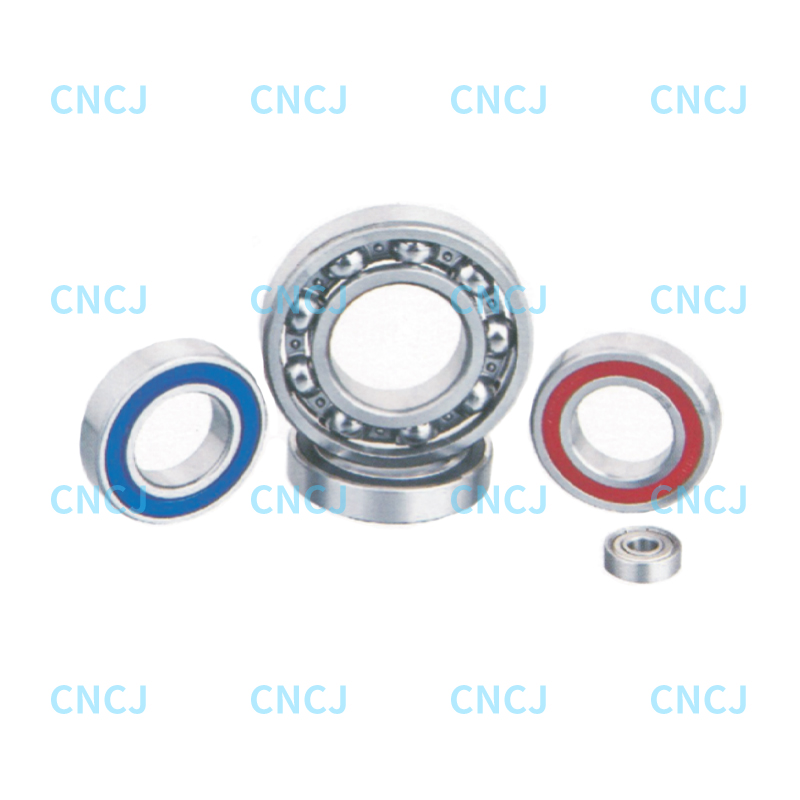
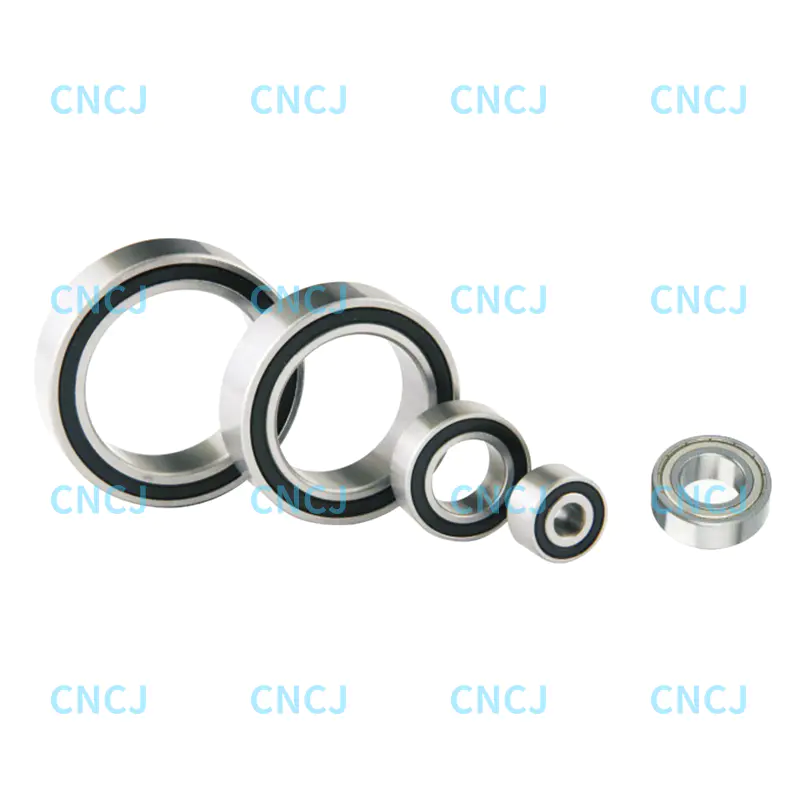
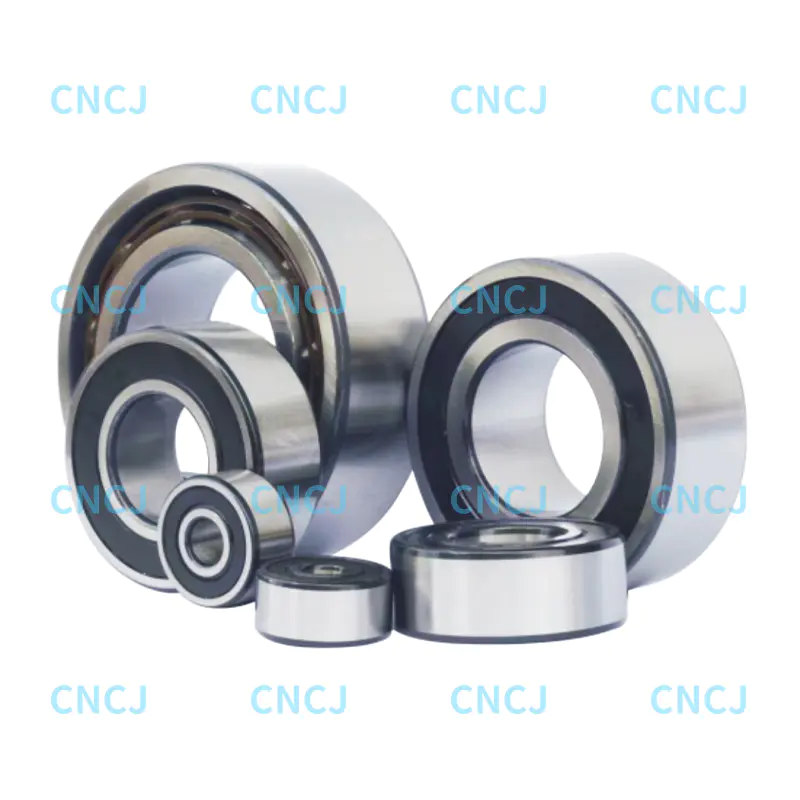
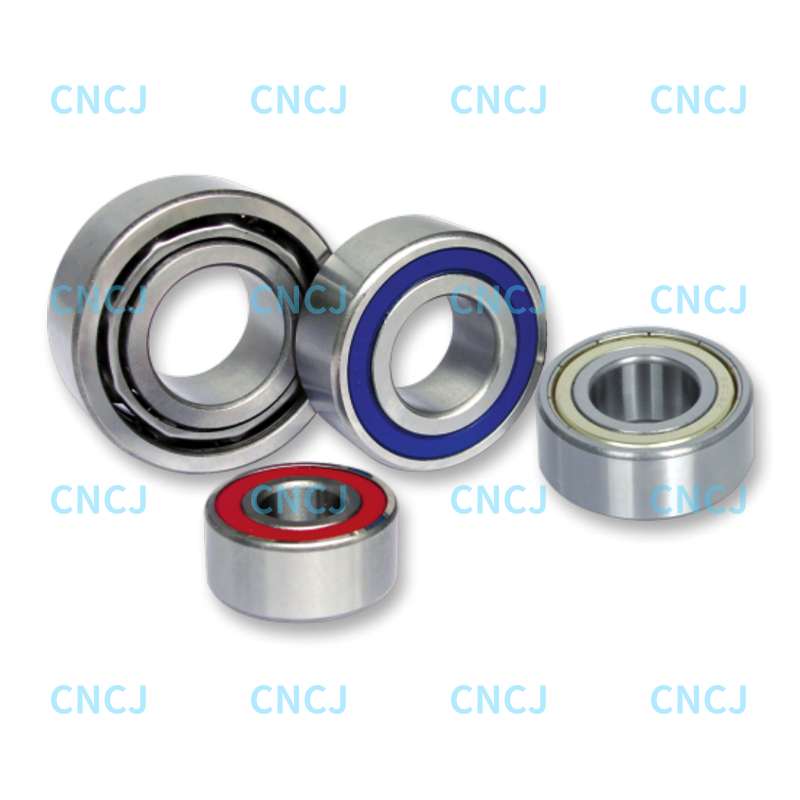
Every bearing datasheet lists two numbers at the top of its load table: C and C0. They look similar, but they answer different questions. C, the basic dynamic load rating, tells you how long a bearing will run under continuous rotation. C0, the static load rating, tells you whether a bearing can survive a heavy shock load without permanent damage. This article explains the dynamic load rating, walks through the rating life calculation, and shows how to apply it when selecting bearings.
What Is the Basic Dynamic Load Rating?
The basic dynamic load rating, written as C, is the constant radial load that a group of apparently identical bearings can carry for one million revolutions before material fatigue appears in 90 percent of the group. It is not a promise for a single bearing; it is a statistical value derived from fatigue testing of complete bearing populations.
Three conditions are built into the definition. The inner ring rotates while the outer ring remains stationary. The load is constant in magnitude and direction. The bearing operates at normal temperatures with adequate lubrication. If the application deviates, life adjustment factors are needed rather than the raw C value.
In practice, C is the first number to compare when checking whether a bearing has enough capacity for a running application. A higher C means longer predicted life at the same load, or the ability to carry a higher load at the same life. It is the most important single value in bearing sizing for rotating equipment.
Static Load Rating C0 vs Dynamic Load Rating C
The static load rating C0 is the maximum load a non rotating bearing can withstand without permanent deformation of rolling elements or raceways. It applies to stationary loads, slowly oscillating motion, and shock loads during mounting or transport. The dynamic load rating C applies to continuous rotation, where rolling contact fatigue over repeated stress cycles is the dominant failure mode.
Comparison of dynamic and static load ratings
Parameter
Dynamic Load Rating C
Static Load Rating C0
Primary failure mode
Rolling contact fatigue
Plastic deformation
Applies to
Rotating operation
Stationary or slow motion
Life basis
One million revolutions, 90 percent reliability
No rotation required
Load type
Constant radial load
Maximum permissible load
Main use
Rating life calculation
Overload and safety check
Think of the dynamic rating as the marathon number and the static rating as the weightlifting number. A bearing that runs hour after hour needs a sufficient C value to survive repeated stress cycles. A bearing that sits still under a heavy bracket needs enough C0 to avoid brinelling its raceways. Many failures trace back to mixing up these two values.
Figure 1: Typical basic dynamic load ratings for common bearing series
The chart compares typical basic dynamic load ratings across six common bearing series. The 33 series double row angular contact ball bearings show the highest C value because two rows of balls create a larger load carrying contact path. Standard deep groove ball bearings show the lowest dynamic rating in this group. The difference between the strongest and weakest series reaches about three times. Engineers therefore rarely choose a bearing by bore size alone; the dynamic load rating often decides which series is usable.
The L10 Rating Life Formula
Once you know C and the actual applied load, the rating life calculation is straightforward. For ball bearings, L10 equals (C divided by P) cubed, multiplied by one million revolutions. For roller bearings, the exponent is 10 over 3 instead of 3. P is the dynamic equivalent load, expressed in the same unit as C.
An example makes it concrete. A 6000 series deep groove ball bearing with C equal to 4.58 kN running under a 1.2 kN equivalent load gives a C over P ratio of 3.82. Cubing that ratio gives 55.5, so L10 is 55.5 million revolutions. At 3000 rpm that is roughly 308 hours of nominal life. Double the load to 2.4 kN, and the life drops to about 39 hours. This nonlinear relationship surprises many engineers.
Figure 2: L10 rating life versus load ratio for ball and roller bearings
The curve shows how quickly the predicted L10 life falls as the load ratio C over P decreases. At a ratio of 1, life is exactly one million revolutions by definition. Moving to 1.5, life rises to about 3.4 million revolutions. When the ratio drops below 1, life falls quickly, reaching only 0.34 million revolutions at 0.7. The steep slope is why overloading a ball bearing is so destructive, and why engineers keep the ratio above 1.5 for continuous operation.
Most bearings in real machines do not carry purely radial loads. Shafts deflect, gears generate axial thrust, and misalignment adds side forces. The dynamic equivalent load P converts a combination of radial and axial loads into a single equivalent radial load that produces the same fatigue life as the actual loading.
For radial bearings, P is calculated as P equals X times Fr plus Y times Fa, where Fr is the radial load, Fa is the axial load, X is the radial load factor, and Y is the axial load factor. If the bearing carries only a radial load, X equals 1 and Y equals 0, so P equals Fr. For angular contact ball bearings, X and Y depend on the contact angle and on the ratio of Fa to Fr.
Typical X and Y factors for double row angular contact ball bearings
Condition
X
Y
Fa / Fr does not exceed e
1
0
Fa / Fr exceeds e, 32 series
0.44
1.42
Fa / Fr exceeds e, 33 series
0.45
1.30
Fa / Fr exceeds e, 52 series
0.44
1.40
The value e is the load ratio limit given in each bearing specification table. When Fa divided by Fr stays below e, the radial term dominates and the axial factor Y is ignored. When the ratio exceeds e, the axial load is significant and the Y factor must be applied. Using the wrong X and Y values is a common source of oversizing or premature failure.
Safety Factors and Real World Operating Conditions
Real applications rarely match the clean test conditions behind C. Vibration, temperature swings, lubrication degradation, contamination, and misalignment all reduce actual bearing life. ISO 281 provides a modified life equation that includes reliability, material, lubrication, and contamination factors. Most selection work applies a safety factor of 1.0 to 1.5 for normal industrial drives and 1.5 to 3.0 for shock loads or critical equipment.
Figure 3: Dynamic and static load ratings grouped by bearing series
This grouped column chart compares C and C0 for the 32, 33, 52, and 53 series double row angular contact ball bearings. Across all four series, the dynamic rating C exceeds the static rating C0. The 33 series offers the highest values in both categories. The 32 series sits at the lower end, reflecting its more compact ball complement. When a machine sees frequent start stop cycles and shock loads, both values matter during the check. The ratio between C and C0 also indicates how much fatigue margin the design carries.
Catalogue C values assume a clean, well lubricated environment. A sealed bearing keeps contamination out but also limits grease replenishment. Housings that trap heat lower the effective material fatigue strength. Bearings operating near their speed limit may need derating. Published C values are a starting point, not a guarantee, and should be reviewed against actual duty cycles.
Comparing Bearing Architectures
Different bearing architectures balance load capacity, speed, stiffness, and noise differently. A deep groove ball bearing is simple, fast, and quiet, but its single row limits load capacity. A double row angular contact ball bearing uses two rows of balls with an optimized contact angle, giving it much higher dynamic and static ratings in the same envelope. A double row ball bearing fits between the two, improving stability and radial capacity while keeping moderate axial capability.
Figure 4: Relative performance profile of three bearing architectures
The radar chart compares three bearing types across six practical attributes. The double row angular contact bearing leads in dynamic load capacity, static load capacity, and stiffness, which is why it is preferred for heavy industrial and high precision applications. The double row ball bearing offers a balanced profile with good load handling and better misalignment tolerance than angular contact designs. The deep groove ball bearing remains the best choice when speed and low noise dominate and loads stay moderate. Misalignment tolerance is the clearest trade off, because angular contact bearings sacrifice it for load capacity. Speed capability also favors the single row deep groove design because its compact ball set generates less centrifugal stress. This profile comparison helps narrow down a bearing family before detailed life calculation begins.
For heavy industrial systems where loads are high and operating hours are long, the 32 and 33 series double row angular contact ball bearings provide the dynamic rating needed to keep L10 life within acceptable limits.
When equipment stability and radial load sharing matter more than axial capacity, double row ball bearings deliver a strong balance of rigidity and quiet running.
Bearing dynamic load rating is the most important number in rotating machinery design. Once you understand what C represents, how it differs from C0, and how it feeds into the L10 life equation, you can compare bearing options with confidence. The calculation is simple; the interpretation is not. Real loads, real environments, and real safety margins all shape whether a bearing choice will succeed. Use the dynamic rating as the starting point, then confirm every application with a careful review of equivalent load and operating conditions.